The American Revolution: The Long Road

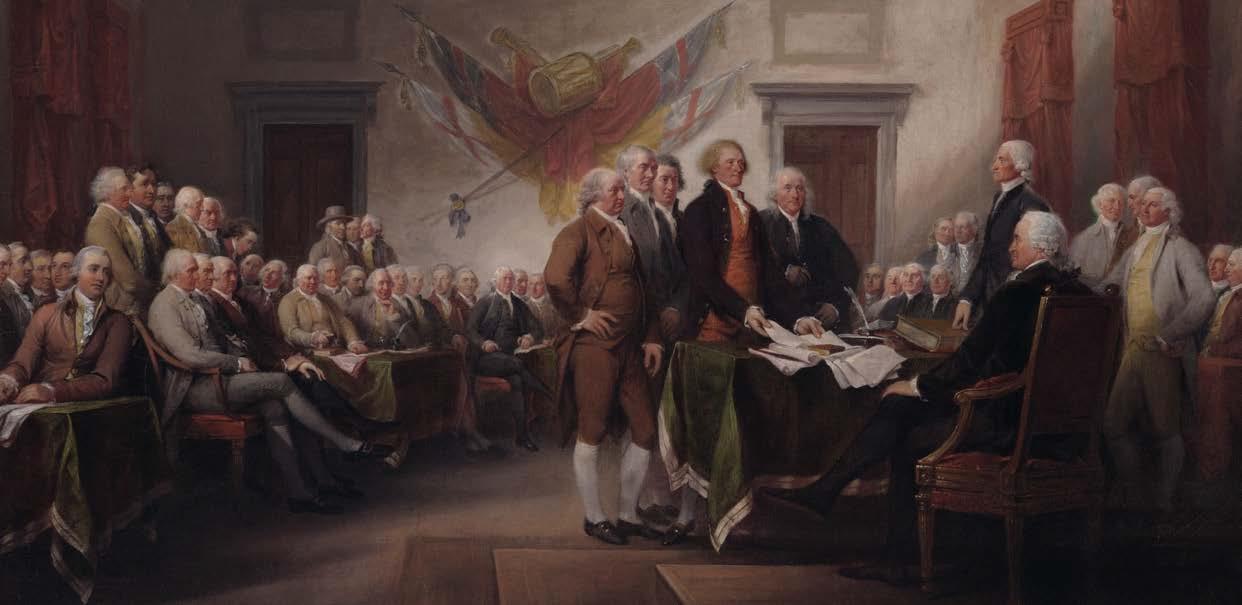
The Declaration of Independence, July 4, 1776. Painting by John Trumbull, 1818

UNLV History Professor Michael Green connects the ideals of the American Revolution to the history of the Silver State.


In 1776, when Thomas Jefferson wrote the Declaration of Independence, present-day Nevada was part of the Spanish empire. But we still feel the effects of Jefferson’s words. 

"We hold these truths to be self-evident, that all men are created equal," was more aspirational than real, but the aspiration remains noble. Nevada is similar: in 1864, our constitution limited the vote to white people. Voters amended it in 1880 to include all males, but the tortured history of civil rights for Black people and for others include Nevada, which became known as "the Mississippi of the West." African Americans, especially in Las Vegas and Reno, had to apply pressure to pass legislation, get jobs, and change attitudes — thanks also to help from some powers who sympathized with them. 
The Declaration of Independence & Birth of the United States | The American Revolution

The Seneca Falls Convention extended Jefferson by saying "all men and women."

In 1869, Nevada became the first state to vote to amend its constitution to allow women’s suffrage, but the proposal failed to pass the required second time. In 1914, Nevada became one of the last states to extend the vote to women, who had to overcome opposition from Nevada’s most powerful leaders and internal divisions on how best to achieve their goals — just as the founders disagreed over policy and politics. As Ben Franklin might say, these groups did their best to hang together so they did not hang separately.

While women’s rights advocates rewrote Jefferson, he rewrote John Locke, who described the government’s duty to protect "life, liberty and property." Jefferson changed property to "the pursuit of happiness." For some, that meant property, for others, government power. Nevadans have a history of opposing government overreach and certainly have encouraged visitors to pursue happiness in ways Jefferson didn’t contemplate.

(top photo) The Declaration of Independence, July 4, 1776. Painting by John Trumbull, 1818. Credit: Yale University Art Gallery