Perez Hilton, Free Speech, and Nevada's Shield Law
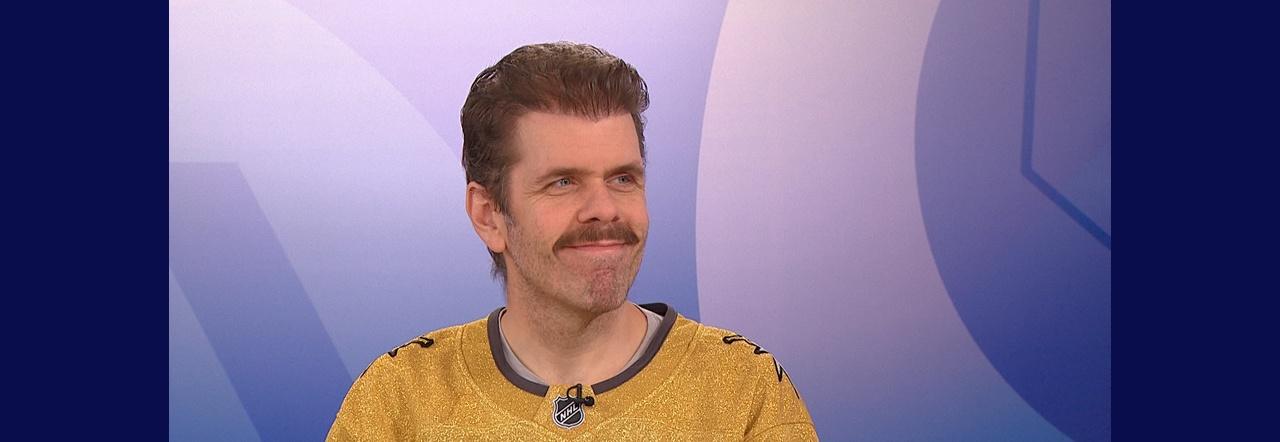
Celebrity gossip columnist Perez Hilton is no stranger to scandal among the stars. He’s made a career reporting on celebrity controversies over the past two decades. The Las Vegas resident recently became part of the story of one of the biggest celebrity scandals of 2024 and 2025: The complex legal battle between actors Blake Lively and Justin Baldoni. The two had a very public falling out after working together on the film “It Ends with Us.”
It’s a complicated case, but in short: Lively is accusing her co-star and director Baldoni of sexual harassment and creating a hostile work environment on set. This case is scheduled for trial in March 2026. Lively was also a producer for the film.
Baldoni has denied these allegations and, in return, claimed Lively and her husband Ryan Reynolds tried to take creative control over “It Ends with Us.” He also alleges that when those efforts failed, Lively fabricated the sexual harassment claims. His counter-lawsuit was dismissed, and his legal team is exploring alternative options.
Both parties are accusing each other of launching retaliatory smear campaigns, and that’s where Hilton enters the story. Lively accused Hilton, along with other bloggers and content creators, of working with Baldoni to further discredit her. Lively’s lawyers issued a subpoena to Hilton in July, demanding he turn over documents and evidence related to his reporting on the case.
As part of this subpoena, Hilton was asked to reveal his sources for his articles on the case, something Hilton says he could never do.
“I knew as a journalist, what was being asked of me was wrong. I knew it was right to fight,” he said.
Hilton shared his experience with Nevada Week, explaining why he chose to represent himself in court. Hilton says it would have cost around $75,000 to hire legal representation. So he researched Nevada’s shield laws for journalists as well as the intricacies of the legal system. Hilton appeared in two in-person hearings, calling it his “Elle Woods” era, after the popular character from the film “Legally Blonde.”
However, the complexity of this case became daunting, especially when Hilton was told to find forensic experts to go through his phone and computer. He reached out to his online following for help and was eventually connected with the ACLU of Nevada. The ACLU of Nevada agreed to represent him, and ultimately, Lively’s attorneys withdrew the subpoena.
“I’m pretty confident with every fibre in my being, that if the ACLU of Nevada had not stepped in, and the optics of that, Blake Lively vs the ACLU, she would still be pursuing the subpoena against me,” Hilton explained.
The ACLU of Nevada told Nevada Week they cannot speculate why the subpoena was withdrawn, but if the case continues against Perez, they will help him. Perez maintains he did not work with Justin Baldoni in his reporting. He instead worked with private sources.
“Was I in communication with sources? Absolutely, just like People magazine has sources, and TMZ has sources. But as I’ve said repeatedly, no one ever told me to write anything negative about Blake Lively. No one paid me, there’s no contract. No one promised me discounts or favors. She does not want to believe this. But I’m only speaking for myself,” Hilton told Nevada Week.
Perez started reporting on the case after The New York Times released an in-depth article about the battle between Lively and Baldoni.
“Initially, when I read all that, I believed her,” Hilton told Nevada Week. “I publicly supported her. And then I changed my mind after I read all the receipts, proof, timeline Justin Baldoni came with. And I’m allowed to change my mind. She does not think it’s organic. She’s convinced it’s astro-turfing, it was this orchestrated, untraceable smear campaign.”
Hilton argued in court that as a journalist, he is protected by free speech rights and Nevada’s Shield Law for reporters. Lively’s team counter-argued that the long-time blogger and columnist did not count as a reporter, something Hilton strongly disagrees with.
“She may not like the kind of reporter I am. But the law does not discriminate. The law does not make one reporter more valuable than the other,” he said, “The Nevada Shield Law and the Federal Reporters’ Privilege protects the act of reporting. And, according to both state and federal law, this is what a journalist is. Someone who gathers information of public interest and shares it with the public. By every conceivable measure, I am a journalist.”
For now, Hilton continues to talk about the case on his social media channels.
A smart and state-focused public affairs program, Nevada Week provides insight into the most current and critical issues facing Nevada. This weekly half-hour show covers a wide range of important issues such as health care, politics, arts and culture, education, economic development, social services and more.
Contact Nevada Week: nevadaweek@vegaspbs.org
A smart and state-focused public affairs program, Nevada Week provides insight into the most current and critical issues facing Nevada. This weekly half-hour show covers a wide range of important issues such as health care, politics, arts and culture, education, economic development, social services and more.
Host Amber Renee Dixon sits down with guests for a casual conversation about their personal passions, new projects and compelling stories that are overlooked in the flurry of the news cycle.
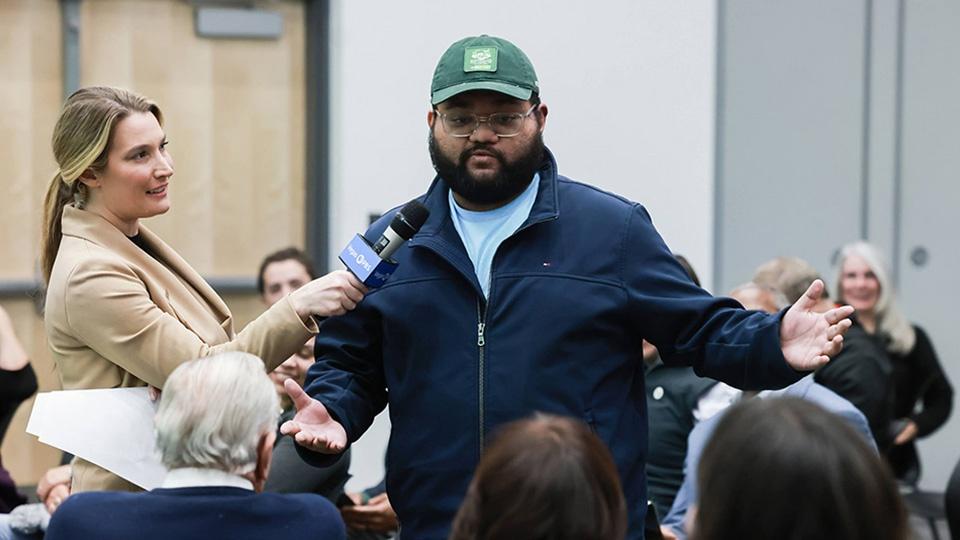
A new initiative focused on civic engagement and community conversations in partnership with The Nevada Independent.